When selecting wire rope or steel cable for industrial, marine, construction, or lifting applications, buyers often face an important question:
How does galvanized steel cable compare to stainless steel options?
At first glance, they may appear very similar. Both are designed to resist corrosion better than ordinary carbon steel products, and both are widely used across various industries.
However, differences in material structure, durability, cost, appearance, and environmental performance can significantly affect long-term results.
This guide explains the major differences between galvanized steel cable and stainless steel cable and helps determine which option is better for your specific application.
Understanding Galvanized Steel Cable
Galvanized steel cable is manufactured from carbon steel wire coated with zinc.
The zinc coating acts as a protective layer between the steel and the surrounding environment.
Two common galvanizing methods include:
Electro-galvanized
Characteristics:
- thinner zinc coating
- smoother surface appearance
- lower cost
- moderate corrosion resistance
Hot-dip galvanized
Characteristics:
- thicker zinc layer
- improved protection
- stronger outdoor durability
- better performance in harsh conditions
The zinc layer sacrifices itself over time to protect the underlying steel.
This process is called sacrificial corrosion protection.
Understanding Stainless Steel Cable
Stainless steel cable uses stainless alloys containing chromium and other corrosion-resistant elements.
Unlike galvanized cable, corrosion protection is built directly into the material.
Common grades include:
304 Stainless Steel
Features:
- general corrosion resistance
- good indoor and outdoor performance
- economical stainless option
316 Stainless Steel
Features:
- stronger chloride resistance
- excellent saltwater performance
- preferred for marine environments
A self-healing oxide layer forms on stainless surfaces, helping resist corrosion even after scratches.
Corrosion Resistance Comparison
Corrosion performance often becomes the most important selection factor.
Galvanized cable
Performs well in:
- construction sites
- warehouses
- agricultural systems
- moderate outdoor environments
However, once zinc coating deteriorates, exposed steel may begin rusting.
Stainless steel cable
Performs exceptionally well in:
- marine environments
- coastal areas
- chemical plants
- humid conditions
- food processing facilities
Particularly for salt exposure, stainless steel generally lasts longer.
Strength Comparison
A common misconception is that stainless steel always provides higher strength.
This is not necessarily true.
High-carbon galvanized cable often offers:
- higher tensile strength
- greater wear resistance
- improved load performance
Stainless steel products prioritize corrosion resistance rather than maximum mechanical strength.
For lifting applications, galvanized products frequently provide excellent performance.
Actual values depend on construction and grade.
Appearance Comparison
Visual appearance matters in some applications.
Galvanized cable
Appearance:
- dull gray finish
- industrial appearance
- visible coating texture
Stainless steel cable
Appearance:
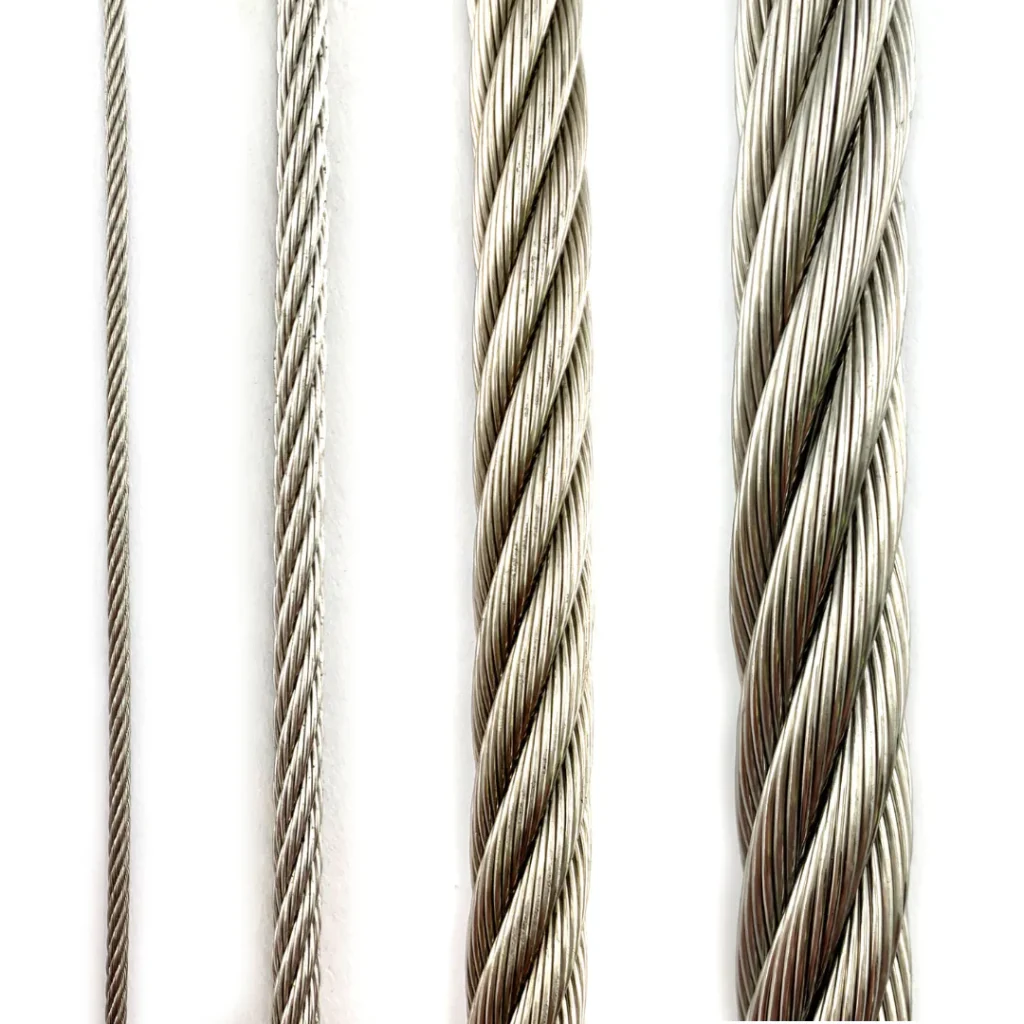
- bright metallic finish
- cleaner surface
- decorative appearance
Applications such as:
- cable railings
- architectural systems
- suspended structures
often prefer stainless steel.
Maintenance Considerations
Environmental exposure affects maintenance requirements.
Galvanized cable:
- coating gradually wears away
- periodic inspection recommended
- replacement may be needed sooner in severe conditions
Stainless cable:
- lower maintenance requirements
- better long-term corrosion performance
- less concern about coating damage
Harsh environments can significantly change maintenance costs.
Cost Comparison
Initial purchase price often influences selection.
General comparison:
Galvanized steel cable:
✓ lower upfront cost
✓ economical for large-scale industrial projects
Stainless steel cable:
✓ higher purchase cost
✓ potentially lower replacement costs over time
In marine environments, lower maintenance and longer lifespan can offset higher initial expenses.
Total ownership cost may differ from purchase cost.
Galvanized vs Stainless Cable Comparison
| Feature | Galvanized Steel Cable | Stainless Steel Cable |
|---|---|---|
| Corrosion resistance | Good | Excellent |
| Saltwater performance | Moderate | Excellent |
| Strength | Often higher | Moderate |
| Appearance | Industrial | Parlak yüzey |
| Maintenance | Moderate | Lower |
| Initial cost | Lower | Daha yüksek |
| Decorative applications | Limited | Excellent |
Which One Should You Choose?
Choose galvanized steel cable if:
- cost control is important
- heavy-duty industrial use is involved
- environmental exposure is moderate
- lifting performance is the priority
Choose paslanmaz çelik kablo if:
- saltwater exposure exists
- corrosion risk is severe
- appearance matters
- long-term durability is critical
There is no universal answer.
The correct choice depends on working conditions.
Final Thoughts
Comparing galvanized steel cable and stainless steel options involves more than price.
Factors such as:
✓ environment
✓ corrosion exposure
✓ maintenance requirements
✓ service life
✓ aesthetics
✓ operating costs
should all be considered.
Galvanized cable remains a practical and economical solution for many industrial applications.
Stainless steel options provide superior corrosion resistance and long-term performance in challenging environments.
Selecting the right material can improve reliability, reduce maintenance, and maximize product life.