1. Introduction
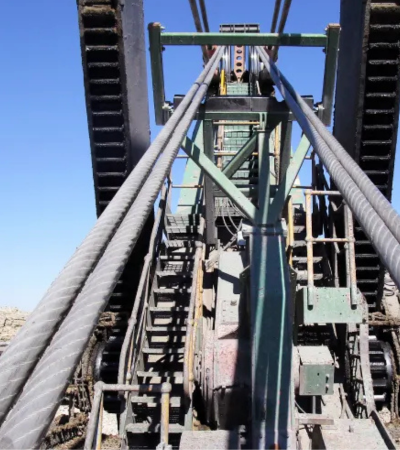
Mining operations represent one of the most demanding industrial environments, where mechanical components are subjected to extreme loads, abrasive materials, and harsh environmental conditions. Among these components, wire ropes play a critical role in lifting, hauling, and material handling systems. Ensuring their durability and reliability is essential for operational safety and cost efficiency.
This article explores the engineering considerations, material selection, and performance optimization of wire ropes used in mining equipment under extreme conditions.
2. Challenges in Mining Environments
Wire ropes in mining applications must withstand a combination of severe stress factors:
- High mechanical loads: Continuous lifting and hauling of heavy ore
- Abrasion and wear: Contact with الصخور、矿石和粗糙表面
- Corrosive environments: Exposure to moisture, chemicals, and underground gases
- Fatigue stress: Repeated bending over sheaves and drums
- Temperature fluctuations: From deep underground heat to cold surface climates
These factors significantly accelerate degradation and increase the risk of premature failure.
3. Material Selection for Enhanced Durability
The performance of wire rope largely depends on its material composition and structural design.
3.1 High-Strength Steel Alloys
High-carbon steel and alloyed steel wires are commonly used due to their superior tensile strength and fatigue resistance. Advanced metallurgical treatments further enhance grain structure and reduce internal defects.
3.2 Corrosion-Resistant Materials
In humid or chemically aggressive environments, materials such as:
- Galvanized steel wire rope
- Stainless steel wire rope (e.g., 316 grade)
are preferred due to their enhanced resistance to oxidation and corrosion.
4. Structural Design Considerations
Wire rope construction directly affects its flexibility, strength, and resistance to wear.
4.1 Core Types
- Fiber Core (FC): Provides flexibility but lower strength
- Independent Wire Rope Core (IWRC): Offers higher strength and better resistance to crushing
Mining applications typically favor IWRC due to its superior structural stability.
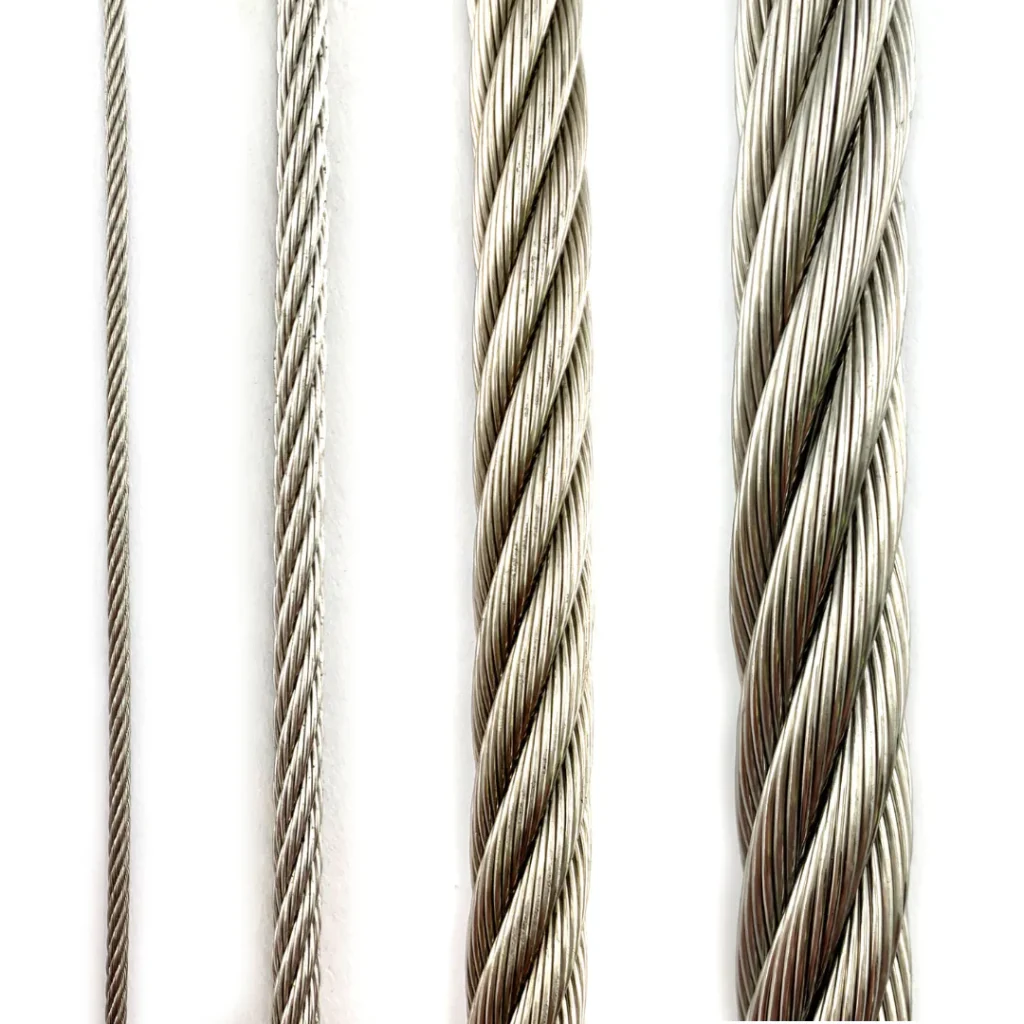
4.2 Strand Construction
- Compacted strands: Increase metallic cross-section, improving strength and wear resistance
- Rotation-resistant designs: Reduce twisting in deep shaft lifting operations
5. Surface Treatment and Lubrication
5.1 Protective Coatings
Surface treatments such as galvanization or plastic coating (PVC/PE) help protect against corrosion and environmental damage.
5.2 Lubrication Technology
Proper lubrication:
- Reduces internal friction
- Minimizes wear between wires
- Enhances fatigue life
Modern wire ropes often use high-performance lubricants that penetrate deeply into the core.
6. Fatigue and Wear Mechanisms
Wire rope failure in mining environments is typically caused by:
- Bending fatigue: Due to repeated cycles over pulleys
- Surface wear: From abrasive contact
- Internal wire breakage: Often invisible from outside
Understanding these mechanisms allows for better predictive maintenance strategies.
7. Maintenance and Inspection Strategies
To ensure long-term performance, mining operations must implement:
- Regular visual inspections
- Magnetic rope testing (MRT) for internal defects
- Scheduled lubrication programs
- Timely replacement based on wear thresholds
Proactive maintenance significantly reduces downtime and improves safety.
8. Engineering Solutions for Extreme Conditions
To optimize wire rope performance in mining:
- Select high-strength, corrosion-resistant materials
- Use compacted, rotation-resistant constructions
- Apply advanced coatings and lubrication systems
- Implement condition monitoring technologies
Customized wire rope solutions tailored to specific mining operations can dramatically improve service life.
9. Conclusion
Wire ropes are indispensable in mining equipment, and their performance directly impacts operational efficiency and safety. By combining advanced materials, optimized structural design, and proper maintenance strategies, it is possible to significantly enhance durability under extreme conditions.
As mining environments continue to evolve, the development of high-performance wire rope solutions will remain a critical area of engineering innovation.