If you have ever looked at a wire rope specification sheet, you may have noticed terms such as 6×19 IWRC, 8×36 IWRC, or steel core wire rope. For beginners, these abbreviations can seem confusing. One of the most common questions is:
What does IWRC mean in wire rope?
The short answer:
IWRC stands for Independent Wire Rope Core.
It refers to a separate steel wire rope used as the core inside the main wire rope structure. Compared with fiber cores, IWRC significantly improves strength, crush resistance, and durability, making it one of the most popular constructions in heavy-duty industrial applications.
This article explains what IWRC is, how it works, and when it should be used.
Understanding Wire Rope Structure
To understand IWRC, first understand how wire rope is built.
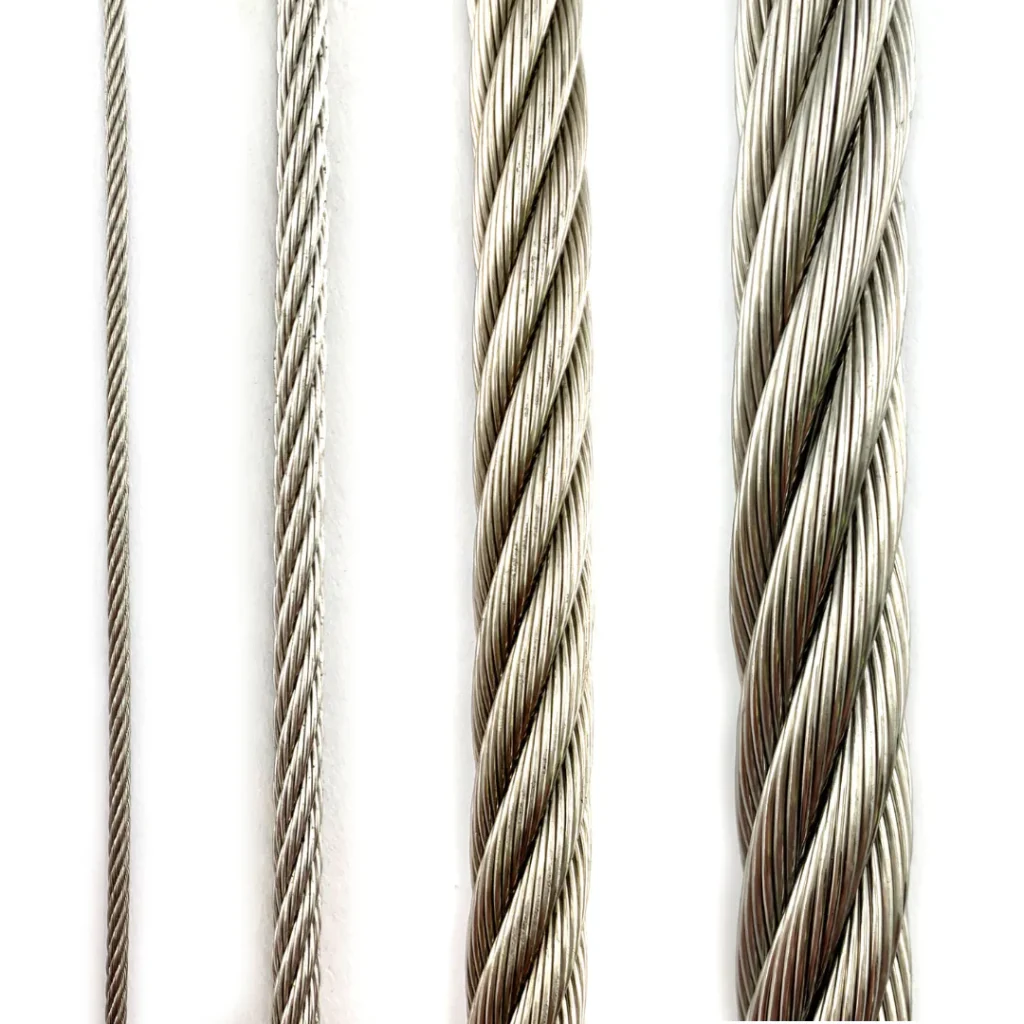
A wire rope is not a single solid steel cable. It consists of several components:
- Individual steel wires
- Strands formed by groups of wires
- A core located in the center
- Outer strands twisted around the core
The core acts as the backbone of the rope.
It supports the outer strands, maintains rope shape, and helps distribute load during operation.
Different core types create very different performance characteristics.
The two most common types are:
- Cœur en fibre (FC)
- Cœur de câble en acier indépendant (IWRC)
What Is an Independent Wire Rope Core?
An Cœur de câble en acier indépendant (IWRC) is a separate miniature steel wire rope placed at the center of the main rope.
Instead of using fiber materials, IWRC uses steel construction.
Typical structure:
Outer strands → wrapped around → steel wire rope core
Because the core itself is a wire rope, it adds additional mechanical support and strength.
For example:
A 6×36 IWRC rope contains:
- Six outer strands
- Thirty-six wires per strand
- One independent steel wire rope as the center core
This design is common in industrial lifting systems.
Why Is IWRC Important?
Many beginners assume the outer strands carry all the load.
That is not entirely true.
The core plays several critical roles:
1. Provides Structural Support
The core keeps outer strands properly positioned.
Without adequate support:
- strands deform
- rope shape changes
- uneven stress develops
A stronger core creates a more stable rope.
2. Improves Crushing Resistance
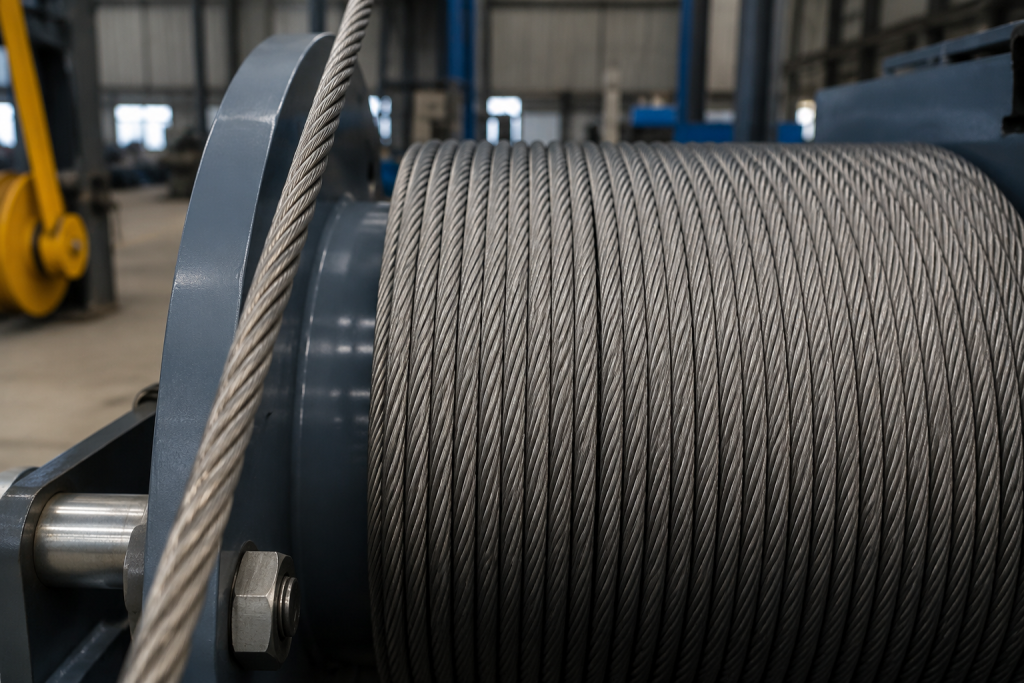
Heavy loads and multi-layer drum winding can compress wire rope.
IWRC resists deformation better than fiber cores.
This is particularly important in:
- cranes
- hoists
- winches
- mining equipment
3. Increases Rope Strength
Steel cores usually contribute additional metallic area.
Compared with fiber core ropes of similar diameter:
IWRC versions often provide higher breaking strength.
4. Performs Better at High Temperatures
Fiber cores can deteriorate under heat exposure.
Steel cores withstand elevated temperatures better.
Applications near:
- furnaces
- steel mills
- foundries
- high-temperature industrial systems
often prefer IWRC.
IWRC vs Fiber Core Wire Rope
Understanding the difference helps buyers select the right rope.
| Feature | IWRC | Fiber Core |
|---|---|---|
| Core material | Steel rope | Natural or synthetic fiber |
| Strength | 20. Contenu en nickel plus élevé (+2–4%) | Lower |
| Crushing resistance | Excellent | Moderate |
| Flexibility | Lower | 20. Contenu en nickel plus élevé (+2–4%) |
| Heat resistance | Excellent | Limited |
| Shock absorption | Moderate | Better |
| Heavy lifting suitability | Excellent | Moderate |
Fiber core ropes are more flexible and absorb vibration better.
IWRC ropes are stronger and more durable under demanding conditions.
Neither is universally better—the choice depends on the application.
Common Applications of IWRC Wire Rope
Because of its mechanical advantages, IWRC is widely used in heavy industries.
Typical applications include:
Crane systems
Tower cranes, overhead cranes, and mobile cranes require strong load support.
Mining equipment
Mining ropes face severe loads and harsh environments.
Port machinery
Container handling equipment often uses IWRC ropes due to repeated bending cycles.
Oil and gas lifting systems
Heavy-duty lifting requires stable structural performance.
Steel mills
High temperatures and large loads make steel-core ropes preferable.
Common Wire Rope Markings Explained
Beginners often see descriptions such as:
6×19 IWRC
This can be decoded as:
- 6 = number of strands
- 19 = wires per strand
- IWRC = Independent Wire Rope Core
Another example:
8×36 IWRC
Means:
- 8 strands
- 36 wires in each strand
- steel wire rope core
Understanding these designations makes selecting products much easier.
Is IWRC Always Better?
Not necessarily.
IWRC has many advantages, but flexibility decreases slightly because of the steel core.
Applications involving:
- small sheaves
- repeated bending
- high flexibility requirements
may sometimes use fiber core constructions.
Selection should consider:
- load capacity
- operating environment
- sheave size
- bending cycles
- temperature
- installation conditions
The strongest rope is not always the best rope.
The right design matters more.
Final Thoughts
So, what does IWRC mean in wire rope?
It stands for Independent Wire Rope Core, a steel wire rope core that strengthens and supports the overall structure.
Compared with fiber cores, IWRC offers:
✓ higher strength
✓ improved crushing resistance
✓ better heat resistance
✓ longer service life in demanding applications
For heavy lifting and industrial environments, IWRC has become one of the most trusted wire rope constructions.
Understanding this simple abbreviation can help beginners make smarter decisions when selecting wire rope systems.