Selecting a wire rope for cranes and hoists is not as simple as choosing the strongest rope available. In lifting systems, rope performance affects safety, equipment reliability, maintenance costs, and operating efficiency.
Among various wire rope constructions, IWRC (Independent Wire Rope Core) has become a preferred option for many heavy-duty lifting applications due to its strength and structural stability.
However, not every IWRC rope is suitable for every crane or hoist system.
This guide explains how to select the right IWRC wire rope and avoid common mistakes during the selection process.
Why Do Cranes and Hoists Commonly Use IWRC?
An канат IWRC uses a separate steel wire rope as its core rather than a fiber core.
This steel core provides:
- Higher strength
- Better crushing resistance
- Greater structural stability
- Improved heat resistance
- Longer service life under heavy loads
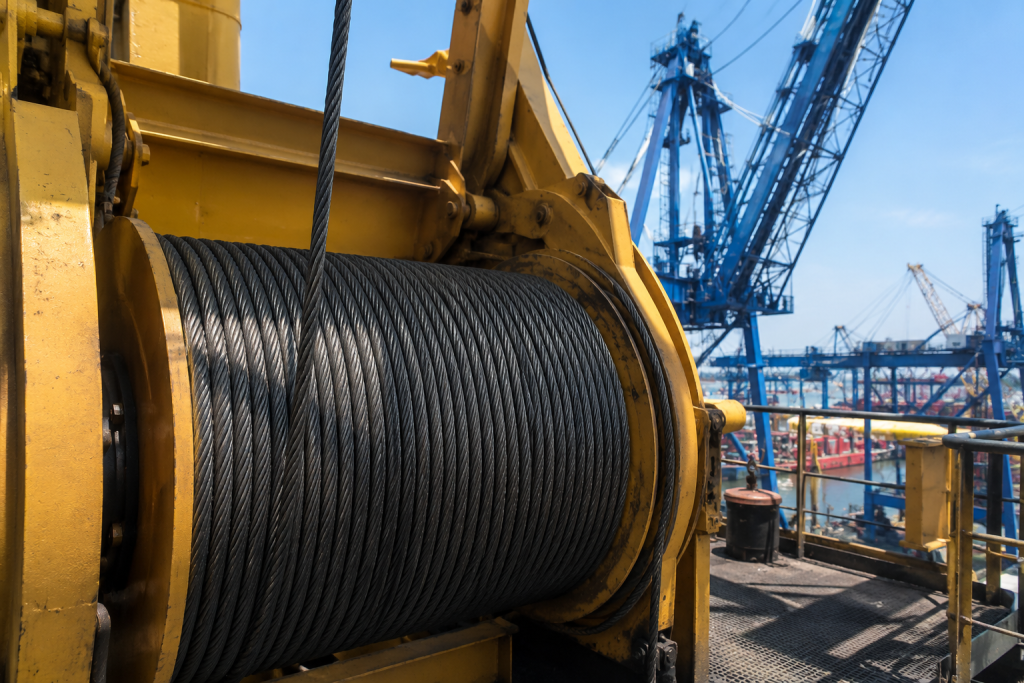
Because cranes and hoists frequently experience repeated loading cycles, bending stresses, and drum pressure, IWRC construction often performs better in demanding environments.
But selecting the right rope requires more than simply choosing “IWRC.”
Step 1: Understand the Working Environment
Before selecting rope specifications, evaluate where and how the equipment operates.
Important questions include:
- Indoor or outdoor operation?
- Exposure to moisture or saltwater?
- High-temperature environment?
- Dust or abrasive materials present?
- Frequent lifting cycles?
- Continuous operation or intermittent use?
Environmental conditions significantly influence rope lifespan.
For example:
Port cranes operating near seawater often require corrosion-resistant ropes.
Steel mills may require ropes with enhanced temperature resistance.
Mining systems may prioritize wear resistance.
Step 2: Determine Load Requirements
Load capacity is one of the first considerations.
However, engineers should not focus only on the weight being lifted.
Additional factors include:
- Dynamic loading
- Shock loading
- Acceleration forces
- Starting and stopping impacts
- Safety factors
Actual working loads can be considerably higher than static loads.
Selecting a rope based solely on rated load may result in premature fatigue or failure.
Always include proper design safety margins.
Step 3: Choose the Correct Rope Construction
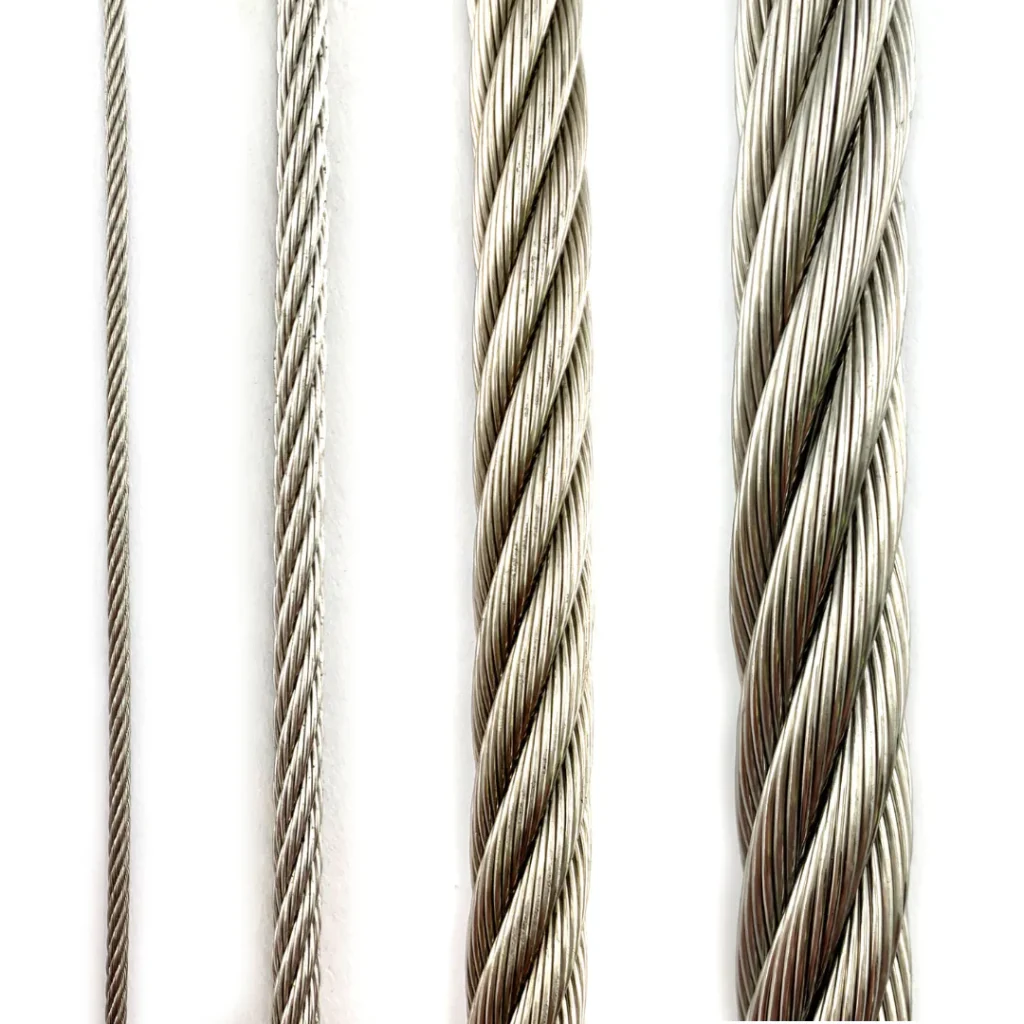
Wire rope construction affects flexibility, fatigue resistance, and wear performance.
Common examples include:
6×19 IWRC
Features:
- Larger outer wires
- Good abrasion resistance
- Moderate flexibility
Often used for:
- general crane operations
- industrial lifting systems
6×36 IWRC
Features:
- More individual wires
- Improved flexibility
- Better bending fatigue resistance
Often used for:
- hoists
- repeated bending applications
- systems with multiple sheaves
8×36 IWRC
Features:
- higher flexibility
- smoother operation
- improved fatigue life
Common for complex lifting systems.
The strongest construction is not always the best choice.
Flexibility matters.
Step 4: Consider Sheave and Drum Diameter
One of the most overlooked factors is the relationship between rope diameter and sheave size.
Wire rope repeatedly bends over:
- sheaves
- pulleys
- drums
Smaller sheaves increase bending stress and accelerate fatigue.
Engineers often evaluate the D/d ratio:
- D = sheave diameter
- d = rope diameter
Larger D/d ratios generally improve rope life.
Using a rope designed for severe bending conditions can reduce premature failure.
Step 5: Select the Proper Rope Diameter
Many buyers assume thicker ropes automatically perform better.
This is not always true.
Oversized ropes may:
- create installation issues
- reduce flexibility
- increase equipment wear
- cause groove mismatch
Undersized ropes can create safety risks.
Diameter selection should always match equipment manufacturer requirements.
Step 6: Evaluate Rotation Characteristics
Lifting height and load behavior affect rope selection.
Tall lifting systems sometimes experience load rotation.
For certain applications:
- rotation-resistant ropes
- compacted strand constructions
- specialized IWRC designs
may provide better performance.
Examples include:
- tower cranes
- container cranes
- high-rise lifting systems
Step 7: Consider Corrosion Protection
Environmental exposure directly affects rope lifespan.
Common protective options include:
Galvanized wire rope
Provides corrosion resistance in outdoor environments.
Stainless steel wire rope
Offers improved performance in marine or chemical environments.
Lubricated ropes
Reduce internal friction and wear.
Choosing the proper protection system often extends service life significantly.
Common Mistakes When Selecting IWRC Rope
Many failures result from incorrect selection rather than poor rope quality.
Typical mistakes include:
- selecting only by breaking strength
- ignoring bending fatigue
- using incorrect D/d ratios
- overlooking environmental conditions
- choosing rope based only on price
- ignoring equipment recommendations
Wire rope failure often begins during specification—not during operation.
Quick Selection Guide
| Application | Recommended Construction |
|---|---|
| General crane lifting | 6×19 IWRC |
| Repeated bending systems | 6×36 IWRC |
| High flexibility applications | 8×36 IWRC |
| Marine environments | Stainless or galvanized IWRC |
| Multi-layer drum systems | IWRC with high crush resistance |
Final Thoughts
Choosing the right IWRC wire rope for cranes and hoists requires balancing multiple factors:
✓ load capacity
✓ flexibility
✓ bending fatigue resistance
✓ environmental conditions
✓ sheave size
✓ corrosion resistance
The ideal rope is not necessarily the strongest or most expensive.
It is the rope that best matches the operating system.
Proper selection improves safety, extends service life, reduces downtime, and lowers long-term operating costs.