When selecting steel wire rope, buyers often focus on diameter, strength, construction, or core type. However, one important feature is frequently overlooked:
Is the wire rope preformed or non-preformed?
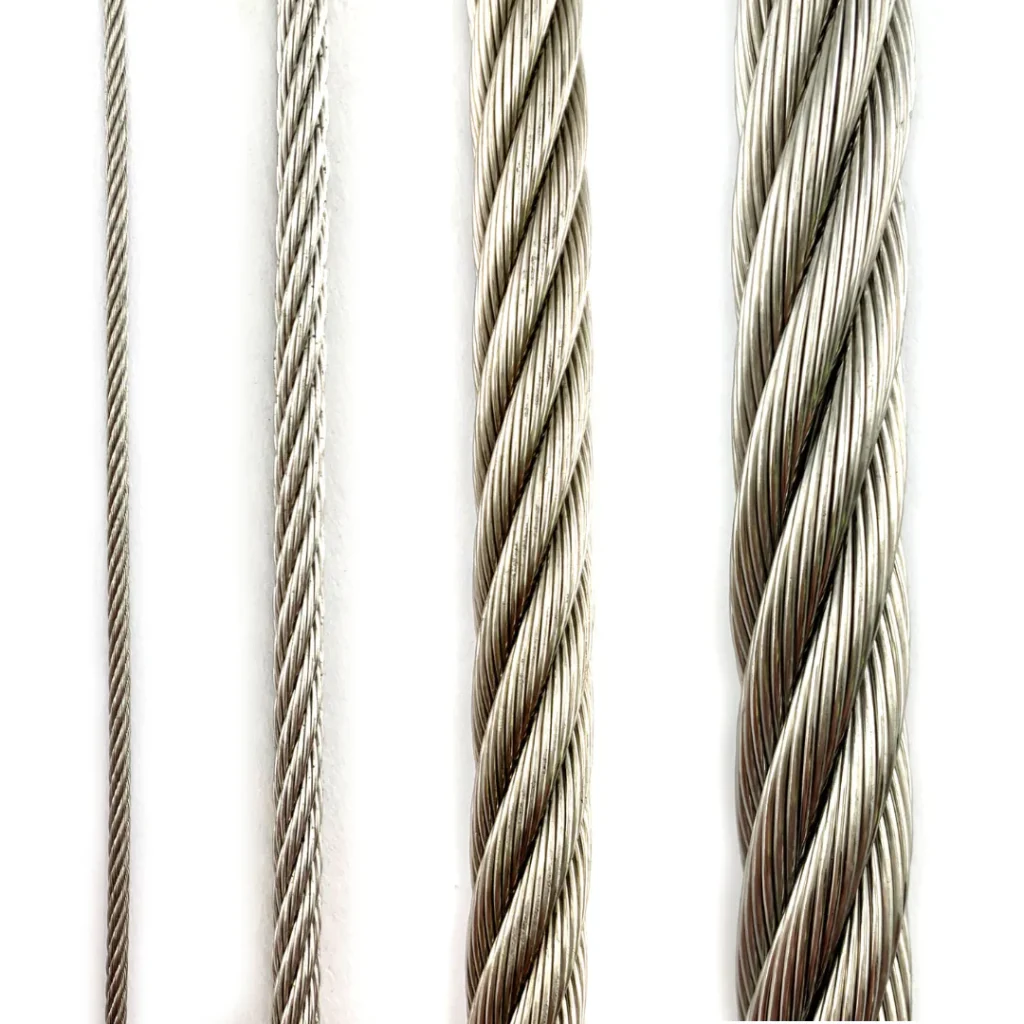
At first glance, both may appear similar. But their manufacturing process and performance characteristics can significantly affect installation, handling, safety, and service life.
Understanding the difference between preformed wire rope and non-preformed wire rope helps engineers and buyers select the right rope for lifting, crane systems, industrial equipment, and heavy-duty applications.
What Is Preformed Wire Rope?
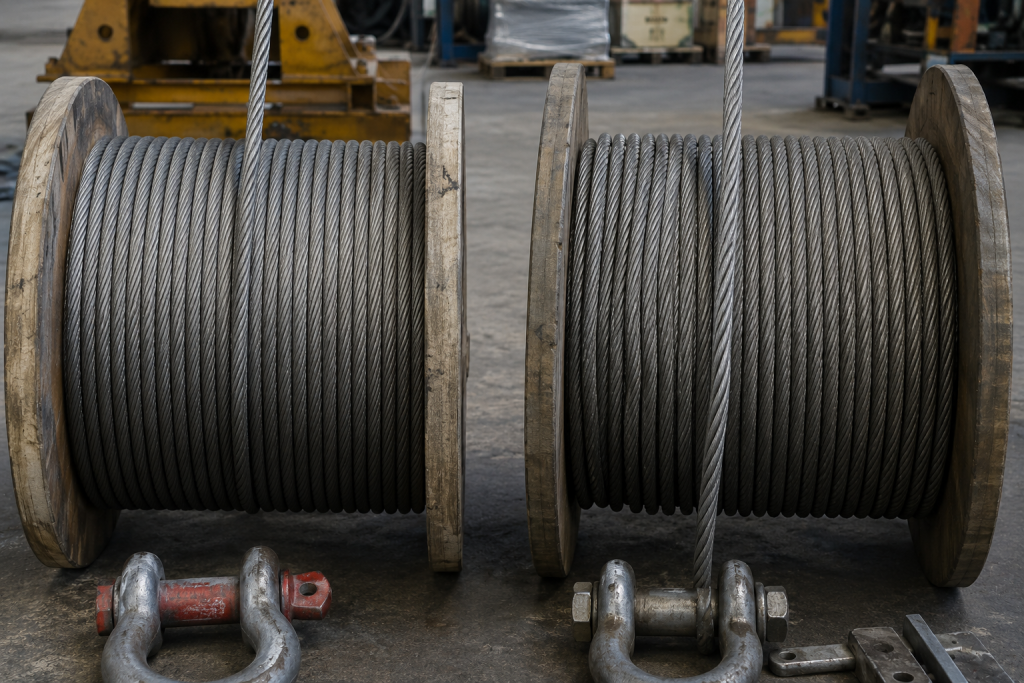
Preformed wire rope is manufactured so that individual wires and strands are shaped into a helical form before the rope is finally closed into its complete structure.
In simple terms, each strand is pre-bent into the shape it naturally occupies inside the finished rope.
Because the wires are already formed into position, they experience lower internal stress after manufacturing.
As a result, preformed rope tends to maintain its shape more naturally.
Characteristics of preformed rope include:
- lower internal stress
- easier handling
- improved flexibility
- reduced strand movement
- smoother installation
Today, most modern industrial wire ropes are preformed.
What Is Non-Preformed Wire Rope?
Non-preformed wire rope is produced without pre-shaping the strands.
The strands are forced into the final rope shape during manufacturing.
Because the strands naturally want to return to their original form, internal stress remains locked inside the rope.
This creates higher residual stress.
Characteristics include:
- stronger tendency to unwind
- higher internal stress
- increased spring-back effect
- greater handling precautions required
Non-preformed ropes were more common in older manufacturing methods and certain specialized applications.
The Main Difference: Internal Stress
The biggest distinction between the two constructions is internal stress distribution.
Imagine bending a metal strip:
If it is shaped gradually and naturally, it retains its form easily.
If forced into shape suddenly, it stores energy and wants to spring back.
Wire rope behaves similarly.
Preformed ropes reduce internal tension.
Non-preformed ropes retain more stored stress.
This difference affects real-world performance.
Handling Differences During Cutting
One of the most noticeable differences appears when cutting the rope.
Preformed rope
After cutting:
- strands generally remain stable
- less tendency to unravel
- easier field handling
Non-preformed rope
After cutting:
- strands may rapidly open
- rope can spring apart
- handling becomes more difficult
Improper cutting methods on non-preformed ropes can create safety risks.
Technicians often apply stronger serving or binding procedures before cutting.
Flexibility Comparison
Preformed ropes generally provide smoother bending behavior.
Advantages include:
- easier passage over sheaves
- reduced strand movement
- improved fatigue performance
- simplified installation
This can be important in:
- cranes
- hoists
- elevators
- lifting equipment
However, flexibility also depends on construction type and wire count.
Fatigue Performance
Repeated bending creates fatigue stress inside wire rope.
Because preformed ropes reduce internal stress concentration, they often perform better under cyclic loading conditions.
Applications involving:
- repeated bending
- drum winding
- sheaves
- continuous operation
may benefit from preformed construction.
Lower residual stress usually means:
- reduced wire movement
- lower internal friction
- improved fatigue life
Safety Considerations
Preformed ropes are often easier and safer to handle.
Non-preformed ropes may create:
- sudden strand release
- whip hazards
- difficult installation conditions
Especially after cutting or during maintenance.
This does not mean non-preformed ropes are unsafe.
It simply means they require more attention during handling.
Preformed vs Non-Preformed Comparison
| Feature | Preformed | Non-Preformed |
|---|---|---|
| Strand shape | Pre-shaped | Forced into position |
| Internal stress | Lower | Maggiore |
| Handling | Easier | More difficult |
| Spring-back tendency | Lower | Maggiore |
| Cutting behavior | Stable | May unravel |
| Installation | Easier | Requires care |
| Fatigue resistance | Generally better | Moderate |
Which One Should You Choose?
For most industrial applications, preformed wire rope is usually preferred.
Common applications include:
- cranes
- hoists
- lifting systems
- construction equipment
- mining equipment
- material handling systems
Non-preformed ropes may still be used in specialized situations where certain operational characteristics are required.
Selection should consider:
- operating environment
- handling requirements
- maintenance procedures
- equipment design
- safety considerations
The correct choice depends on the application.
Final Thoughts
Preformed and non-preformed wire ropes may look nearly identical from the outside, but internally they behave very differently.
Preformed wire rope offers:
✓ easier handling
✓ lower internal stress
✓ improved fatigue resistance
✓ reduced unraveling risk
✓ smoother installation
For most lifting and industrial systems, these advantages make preformed rope the preferred option.
Understanding this distinction can help buyers avoid installation issues and improve long-term wire rope performance.